

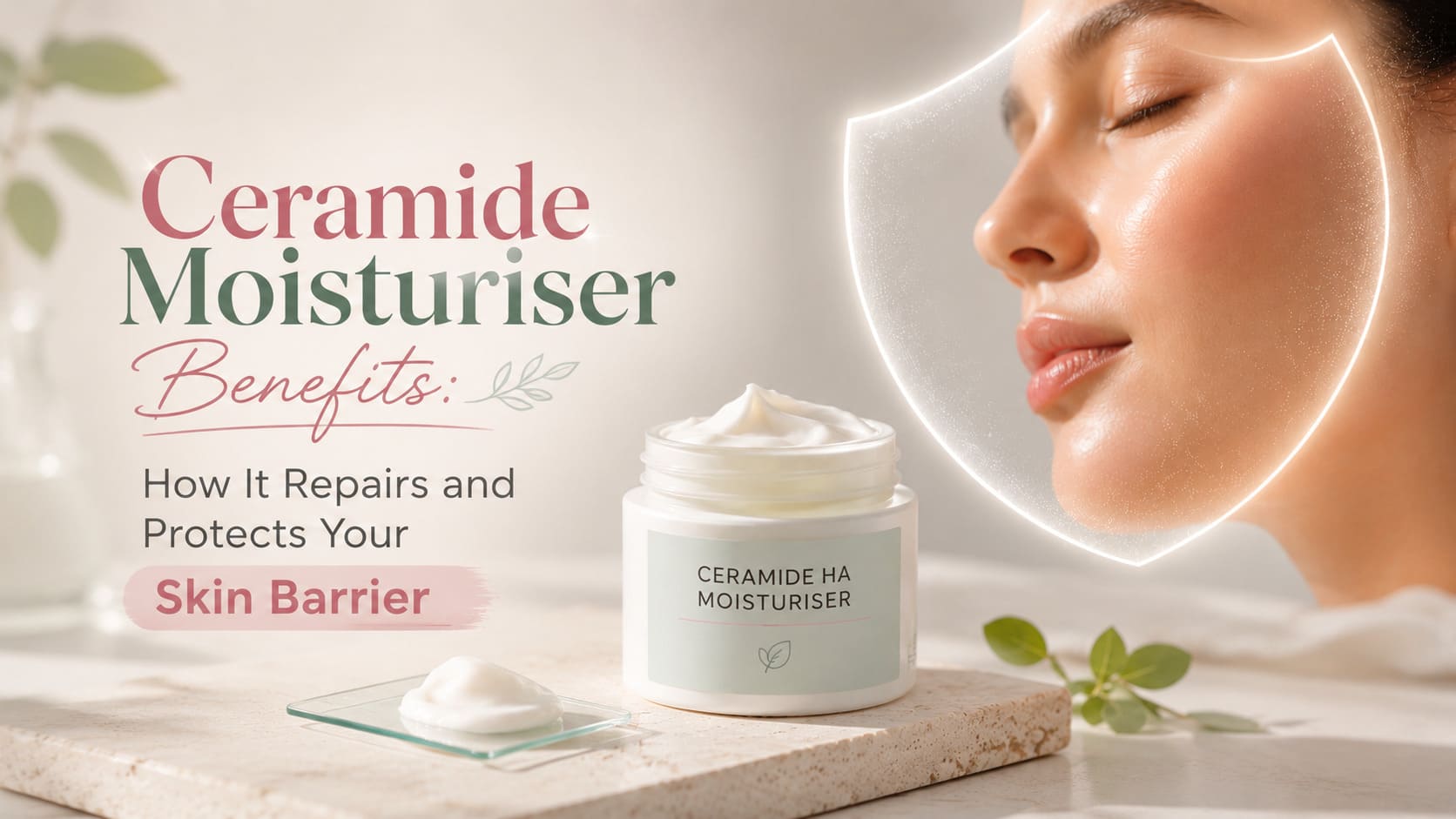
If your skin has been feeling tight, dry, flaky, or unusually reactive lately, the problem might not be that your routine needs more products. It might be that your skin barrier is struggling to do its job. This is where ceramide moisturisers come in, and it's why they've become one of the most recommended ingredients in modern skincare, from dermatologist offices to everyday routines.
In this guide, we'll break down what your skin barrier actually does, what ceramides are and how they work, how a ceramide moisturiser repairs and protects that barrier, and exactly how to use one for the best results.
Let's look at why this matters and how it actually works.
What Is the Skin Barrier, and Why Does It Matter?
Your skin barrier, also known as the stratum corneum, is the outermost layer of your skin. Think of it as your skin's protective shield, standing between your body and everything the outside world throws at it, from weather and pollution to bacteria and harsh skincare ingredients.
This barrier has two main jobs:
- Keep moisture in. A healthy barrier prevents water from escaping through your skin, which is what keeps your complexion plump, soft, and hydrated.
- Keep irritants out. It blocks pollutants, allergens, and bacteria from penetrating deeper layers of skin, where they can trigger inflammation, sensitivity, or breakouts.
When this barrier is strong, your skin feels comfortable, hydrated, and resilient, even when it's exposed to weather changes or new products. When it's compromised, you'll usually notice it fairly quickly: dryness, flakiness, redness, tightness, or sudden sensitivity to products that never used to bother you.
What Causes a Damaged Skin Barrier?
Barrier damage rarely happens overnight. It's usually the result of small, repeated stressors that wear down your skin's natural defences over time. Common culprits include:
- Over-exfoliating with acids, scrubs, or retinoids used too frequently
- Harsh cleansers that strip natural oils along with dirt and makeup
- Hot water, which feels great but breaks down the lipids holding your barrier together
- Extreme weather, including dry winter air, wind, and intense sun exposure
- Ageing, since natural ceramide production slows down over time
- Pollution and environmental stress, which gradually weaken barrier function
- Using too many active ingredients at once, without enough moisture support to balance them out
Most people don't realise their barrier is compromised until symptoms show up, which is why prevention through consistent barrier support matters just as much as treatment.
Signs Your Skin Barrier Needs Support
- Skin feels tight or uncomfortable shortly after cleansing
- Increased flakiness or rough, uneven texture
- Redness or a stinging sensation when applying products
- Products that used to work well now cause irritation
- Skin looks dull or dehydrated despite a consistent routine
- Breakouts appearing in areas that used to be clear
If several of these sound familiar, your barrier likely needs extra support, and a ceramide moisturiser is one of the simplest, most effective ways to start rebuilding it.
What Are Ceramides?
Ceramides are naturally occurring lipids found in the outer layer of your skin. Alongside cholesterol and fatty acids, they make up a large portion of your skin barrier's structure.
A helpful way to picture this: if skin cells are bricks, ceramides act as the mortar holding everything in place. This "brick and mortar" structure is what keeps your skin barrier intact, flexible, and functional. Without enough ceramides, that mortar weakens, gaps start to form between the bricks, and moisture escapes while irritants find it easier to get in.
Your skin naturally produces several different types of ceramides, each playing a slightly different role in maintaining barrier strength. Unfortunately, ceramide levels don't stay constant throughout life. They decline with age, and can also be depleted faster by sun exposure, harsh cleansers, over-exfoliation, hot showers, cold weather, and pollution, which is exactly why replenishing them topically can make such a noticeable difference.
How Ceramide Moisturiser Repairs and Protects Your Skin Barrier
1. Replenishes What Your Skin Has Lost
Since ceramides are already a natural part of your skin's structure, applying them topically helps restore what environmental stress and ageing have depleted. This is often described as skin-identical care, giving your skin more of what it already recognises and knows how to use.
2. Locks In Moisture
A strong ceramide barrier reduces transepidermal water loss, the process where moisture escapes through your skin into the air. Less water loss means better hydration retention throughout the day, rather than skin feeling dry again just a few hours after moisturising.
3. Strengthens Skin's Defence Against Irritants
A well-supported barrier is better equipped to block out environmental aggressors like pollution and allergens, which can otherwise penetrate weakened skin and trigger redness, sensitivity, or breakouts.
4. Calms Redness and Irritation
Because ceramides help repair a weakened barrier, they can also reduce the redness, tightness, and reactivity that often comes with barrier damage, leaving skin feeling calmer and more comfortable over time rather than constantly on edge.
5. Supports Skin Recovering From Actives
If you use exfoliating acids, retinol, or other active ingredients, a ceramide moisturiser helps rebuild the barrier that these actives can sometimes temporarily disrupt, making it easier to tolerate your routine long term without overdoing the irritation.
6. Helps Skin Adapt to Seasonal and Climate Changes
A reinforced barrier is more resilient to sudden shifts in temperature, humidity, and wind, which is especially useful heading into drier months or when spending time somewhere with a different climate.
Why Ceramides and Hyaluronic Acid Work So Well Together
Ceramides and hyaluronic acid solve two different hydration problems, which is why they're so often combined in one formula.
| Ingredient | What It Does | Type |
| Hyaluronic Acid | Draws moisture from the air and deeper skin layers up to the surface | Humectant |
| Ceramides | Seals moisture in and reinforces the barrier so it doesn't escape | Barrier-repairing lipid |
Used on their own, humectants like hyaluronic acid can sometimes pull moisture up without adequately sealing it in, especially in dry climates. Ceramides solve that problem by locking hydration in place. Used together, you get both increased hydration and better retention, which is a big part of why ceramide and hyaluronic acid moisturisers are considered such an effective pairing for dry or dehydrated skin.
Ceramide Moisturiser vs. Regular Moisturiser
| Ceramide Moisturiser | Regular Moisturiser | |
| Main function | Repairs and strengthens the skin barrier | Hydrates the surface of the skin |
| Ingredient type | Skin-identical lipids | Varies widely, often oils or humectants alone |
| Best for | Compromised, sensitive, or reactive skin | General daily hydration |
| Long-term effect | Builds lasting barrier resilience | Provides temporary surface hydration |
Both types of moisturiser can hydrate your skin, but ceramide moisturisers go a step further by targeting the structural cause of dryness and sensitivity, rather than just sitting on top of the skin.
Who Should Use a Ceramide Moisturiser?
A common misconception is that rich-sounding barrier ingredients are only for dry skin. In reality, ceramide moisturisers tend to work well across most skin types, including:
- Dry or dehydrated skin
- Sensitive or reactive skin
- Skin recovering from over-exfoliation or active ingredients
- Oily or acne-prone skin, since a well-balanced barrier can help regulate oil production rather than add to it
- Anyone dealing with seasonal dryness or harsh weather changes
- Anyone who wants to prevent barrier damage before it starts, not just treat it afterwards
Because ceramides are lightweight and skin-identical, they typically absorb well without feeling heavy or greasy, even on oilier skin types.
How to Use Ceramide Moisturiser for Best Results
Step 1: Cleanse First
Start with a gentle, non-stripping cleanser. Washing with a harsh cleanser and then applying a barrier-repairing moisturiser works against itself, so a gentle cleanse sets the right foundation.
Step 2: Apply Any Serums
If you use a hyaluronic acid serum or other hydrating actives, apply them to slightly damp skin before your moisturiser, so the moisturiser can help seal that hydration in.
Step 3: Apply Your Ceramide Moisturiser
Massage a generous amount evenly across your face and neck until fully absorbed. Unlike lightweight lotions, ceramide moisturisers are designed to sit on the skin and do their repair work, so there's no need to rush this step.
Step 4: Don't Forget SPF in the Morning
A strengthened barrier still needs protection from UV exposure, which is one of the biggest contributors to barrier damage in the first place. Apply sunscreen as your final morning step.
Step 5: Repeat Morning and Night
Consistency makes the biggest difference here. Apply your ceramide moisturiser twice daily rather than only when your skin already feels dry, since barrier support works best as ongoing maintenance, not damage control after the fact.
How Long Until You See Results?
Barrier repair isn't instant, since your skin renews itself in natural cycles. Here's a general idea of what to expect:
| Timeframe | What You Might Notice |
| Days 1 to 3 | Skin feels softer and more comfortable immediately after application |
| Week 1 to 2 | Less tightness after cleansing; reduced flakiness |
| Week 3 to 4 | Noticeably calmer skin with fewer reactive moments |
| Week 4 to 6 | Improved texture and stronger resilience to weather and actives |
Everyone's skin renews at a slightly different pace, but most people need at least four to six weeks of consistent use before judging the full results.
Common Mistakes to Avoid
- Only using it when skin already feels dry. Barrier support works best as a consistent daily habit, not an occasional fix.
- Skipping moisturiser because you have oily skin. This can actually make oil production worse by signalling to your skin that it needs to compensate.
- Layering too many actives without enough barrier support. If you're using acids or retinol, a ceramide moisturiser helps your skin tolerate them better.
- Using hot water to cleanse before applying. Hot water strips natural oils and can undo some of the benefits you're about to apply.
- Expecting instant results. Barrier repair takes time, often several weeks of consistent use, since skin naturally renews in cycles.
- Applying too little product. Ceramide moisturisers are often designed to be used generously, unlike lightweight serums.
Final Thoughts
A healthy skin barrier is the foundation of comfortable, resilient skin, and ceramides are one of the most effective ingredients available for rebuilding it. Combined with hyaluronic acid for hydration, a ceramide moisturiser helps repair damage, lock in moisture, and protect skin from daily stressors, all while keeping your routine simple and easy to stick with.
Ready to strengthen your skin barrier? Shop Ceramide + HA Intense Moisturiser and give your skin the daily support it needs to stay hydrated, calm, and protected.


