

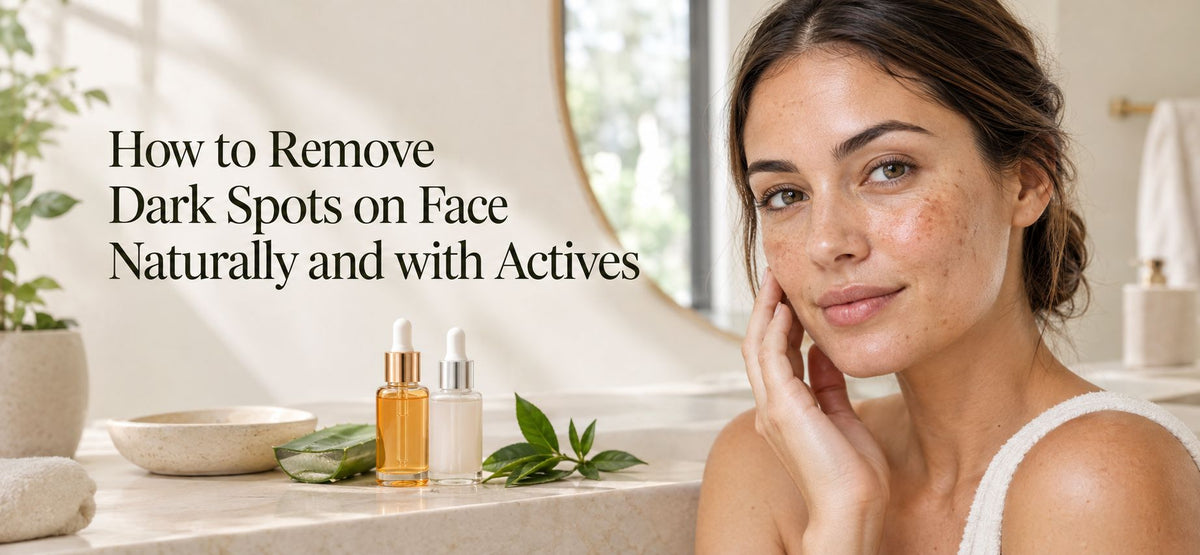
Dark spots are one of the most common skin concerns in Australia. Between strong UV levels, past breakouts and natural ageing, most of us will deal with uneven tone at some point. The good news is that dark spots can be faded with the right approach, patience and a consistent routine.
In this guide, we break down what causes dark spots, which natural methods are worth trying, and which active ingredients have the best evidence behind them.
What Causes Dark Spots on the Face?
Dark spots, also called hyperpigmentation, happen when your skin produces extra melanin in a specific area. Melanin is the pigment that gives skin its colour, and certain triggers can cause it to build up in patches.
The most common causes include:
- Sun exposure: UV rays are the number one trigger. Sun spots often appear on the cheeks, forehead and nose.
- Post-acne marks: After a pimple heals, it can leave behind a flat dark mark. This is called post-inflammatory hyperpigmentation.
- Hormonal changes: Pregnancy, birth control and hormonal shifts can cause melasma, which shows up as larger patches.
- Ageing: Years of sun exposure often show up as age spots later in life.
- Skin irritation: Harsh scrubs, picking at skin or reactions to products can leave marks.
Knowing your type of dark spot helps you choose the right treatment, because some respond faster than others.
Natural Ways to Remove Dark Spots on Face
Natural options can support your skin, though results are usually gentle and slower. Here are the ones worth considering.
1. Daily Sunscreen (The Most Important Step)
This is not glamorous, but it is the foundation of every dark spot routine. Without sunscreen, UV exposure keeps triggering more melanin and undoes your progress. Use a broad spectrum SPF 50+ every morning, and reapply if you are outdoors.
2. Aloe Vera
Aloe vera gel is soothing and hydrating. It contains a compound called aloin, which some small studies suggest may help lighten pigmentation. It is gentle enough for most skin types, but results are mild.
3. Green Tea
Green tea extract contains antioxidants that may help calm the skin and protect against environmental damage. You will find it in many skincare formulas, and it can also be used as a cooled tea compress.
4. Turmeric
Turmeric has been used traditionally in skincare for its brightening reputation. If you try it, mix it with yoghurt or honey and patch test first, as it can stain the skin temporarily and irritate sensitive types.
5. Hydration and a Healthy Diet
Skin heals better when it is nourished. Foods rich in vitamin C, vitamin E and antioxidants, such as citrus fruit, berries, nuts and leafy greens, support overall skin health from the inside.
The Lemon Juice Myth
You will often see lemon juice recommended online for dark spots. We suggest avoiding it. Lemon juice is highly acidic and can irritate the skin, cause dryness and even make dark spots worse. It also makes skin more sensitive to sunlight. Safer, more effective options exist.
Are Natural Remedies Enough?
Natural remedies can be a helpful support, but they often work slowly and may not be strong enough for stubborn pigmentation. For visible, lasting improvement, most people benefit from adding proven active ingredients into their routine. These are ingredients that have been studied for their ability to help fade the appearance of dark spots.
Best Active Ingredients for Dark Spots
Vitamin C
Vitamin C is one of the most popular ingredients for brightening. It is an antioxidant that helps protect skin from free radical damage and supports a more even, radiant complexion. Over time, regular use may help fade the look of dark spots and dullness.
If you are looking for a place to start, the 20% Vitamin C Face Serum combines Vitamin C with Ferulic Acid and Hyaluronic Acid, making it both brightening and hydrating. It is best applied in the morning, followed by sunscreen, as this pairing helps boost your daily protection.
Kojic Acid
Kojic acid is derived from fungi and is widely used to target pigmentation. It works by helping to slow down the enzyme involved in melanin production, which can help reduce the appearance of dark spots and uneven tone over time.
A gentle option is the 1% Kojic Acid Serum, which has a lightweight, non-greasy texture and is suitable for daily use. Because it targets pigmentation directly, it is a great choice for post-acne marks and sun spots.
Niacinamide
Niacinamide, also known as Vitamin B3, helps support the skin barrier, calm redness and improve the look of uneven tone. It is well tolerated by most skin types and pairs nicely with other actives.
AHAs and Mandelic Acid
Alpha hydroxy acids such as glycolic and mandelic acid gently exfoliate the surface of the skin. This helps lift away dull, pigmented cells and allows fresh skin to come through. Mandelic acid is a good choice for sensitive skin because its larger molecule size makes it milder.
Chemical exfoliants should be introduced slowly, starting once or twice a week.
A Simple Morning and Night Routine for Dark Spots
You do not need ten steps. A simple, consistent routine works best.
Morning
- Gentle cleanser
- Vitamin C serum
- Lightweight moisturiser
- Broad spectrum SPF 50+
Night
- Gentle cleanser
- Kojic acid serum (or an exfoliating treatment on alternate nights)
- Moisturiser to support your skin barrier
Introduce one new active at a time and give your skin about two weeks before adding another. This makes it easier to spot what works and what does not.
Common Mistakes That Make Dark Spots Worse
Even a great routine can be undone by a few habits. Watch out for these:
- Skipping sunscreen: UV exposure darkens existing spots and creates new ones.
- Over-exfoliating: Too many acids or harsh scrubs can inflame the skin and trigger more pigmentation.
- Picking pimples: This increases the chance of leaving a dark mark behind.
- Using too many actives at once: More is not better. Overloading the skin can cause irritation.
- Expecting overnight results: Pigmentation takes time to fade, and rushing often leads to irritation.
How Long Does It Take to See Results?
Patience is key. Most people begin to notice changes in tone and brightness after about 4 to 8 weeks of consistent use, while deeper or older pigmentation can take 3 months or longer. Results vary depending on the cause of the spots, your skin type and how consistently you protect your skin from the sun.
Taking a photo in the same lighting every two weeks is a helpful way to track progress, since daily changes are hard to see.
When to See a Dermatologist
Most dark spots are harmless, but see a doctor or dermatologist if a spot:
- Changes in size, shape or colour
- Has an irregular border
- Itches, bleeds or feels different from the surrounding skin
- Appears suddenly and looks unusual
In Australia, regular skin checks are especially important given our high rates of skin cancer. If you are unsure, it is always better to get it checked. Also speak to a professional if you are pregnant or breastfeeding before starting new actives.
Frequently Asked Questions
Can dark spots go away permanently?
Dark spots can fade significantly with the right routine, but they may return if your skin is exposed to the sun without protection. Daily sunscreen is essential for maintaining results.
Does lemon juice remove dark spots?
No. Lemon juice can irritate the skin and make pigmentation worse. Gentler, better-researched ingredients such as Vitamin C and Kojic Acid are a safer choice.
Can I use Vitamin C and Kojic Acid together?
Yes, many people use them in the same routine. A common approach is Vitamin C in the morning and Kojic Acid at night. If your skin feels sensitive, start with one and add the other gradually.
How long should I use a dark spot serum before seeing results?
Give it at least 4 to 8 weeks of consistent daily use before judging the results.
Are natural remedies or actives better for dark spots?
Natural remedies can support skin health, but actives generally deliver more noticeable results for stubborn pigmentation. Many people use both together as part of a balanced routine.


